

-
Faculty of Arts and HumanitiesJakobi 2, r 116-121, 51005 Tartu linn, Tartu linn, TartumaaJakobi 2, 51005 Tartu linn, Tartu linn, TartumaaJakobi 2, IV korrus, 51005 Tartu linn, Tartu linn, TartumaaJakobi 2, III korrus, ruumid 302-337, 51005 Tartu linn, Tartu linn, TartumaaÜlikooli 16, 51003 Tartu linn, Tartu linn, TartumaaÜlikooli 18, 50090 Tartu linn, Tartu linn, TartumaaLossi 3, 51003 Tartu linn, Tartu linn, TartumaaPosti 1, 71004 Viljandi linn, ViljandimaaJakobi 2, 51005 Tartu linn, Tartu linn, TartumaaJakobi 2, 51005 Tartu linn, Tartu linn, TartumaaFaculty of Social SciencesLossi 36, 51003 Tartu linn, Tartu linn, TartumaaJakobi 5, 51005 Tartu linn, Tartu linn, TartumaaLossi 36, ruum 301, 51003 Tartu linn, Tartu linn, TartumaaNarva mnt 18, 51009 Tartu linn, Tartu linn, TartumaaNäituse 2, 50409 Tartu linn, Tartu linn, TartumaaNäituse 20 - 118, 50409 Tartu linn, Tartu linn, TartumaaLossi 36, 51003 Tartu linn, Tartu linn, TartumaaRaekoja plats 2, 20307 Narva linn, Ida-VirumaaLossi 36, 51003 Tartu linn, Tartu linn, TartumaaLossi 36, 51003 Tartu linn, Tartu linn, TartumaaFaculty of MedicineRavila 19, 50411 Tartu linn, Tartu linn, TartumaaBiomeedikum, Ravila 19, 50411 Tartu linn, Tartu linn, TartumaaNooruse 1, 50411 Tartu linn, Tartu linn, TartumaaL. Puusepa 1a, 50406 Tartu linn, Tartu linn, TartumaaL. Puusepa 8, 50406 Tartu linn, Tartu linn, TartumaaRavila 19, 50411 Tartu linn, Tartu linn, TartumaaUjula 4, 51008 Tartu linn, Tartu linn, TartumaaRavila, 50411 Tartu linn, Tartu linn, TartumaaRavila 19, 50411 Tartu linn, Tartu linn, TartumaaFaculty of Science and TechnologyVanemuise 46 - 208, 51003 Tartu linn, Tartu linn, TartumaaNarva mnt 18, 51009 Tartu linn, Tartu linn, TartumaaRavila 14a, 50411 Tartu linn, Tartu linn, TartumaaNarva mnt 18, 51009 Tartu linn, Tartu linn, TartumaaRiia 23, 23b - 134, 51010 Tartu linn, Tartu linn, TartumaaNooruse 1, 50411 Tartu linn, Tartu linn, TartumaaJ. Liivi tn 2, 50409 Tartu linn, Tartu linn, TartumaaRiia 23b/2, 51010 Tartu linn, Tartu linn, TartumaaVanemuise 46, 51003 Tartu linn, Tartu linn, TartumaaVanemuise 46, 51003 Tartu linn, Tartu linn, TartumaaArea of RectorArea of Vice Rector for Academic AffairsUppsala 10, 51003 Tartu linn, Tartu linn, TartumaaÜlikooli 18b, 51005 Tartu linn, Tartu linn, TartumaaÜlikooli 18a (III korrus), 51005 Tartu linn, Tartu linn, TartumaaArea of Vice Rector for ResearchW. Struve 1, 50091 Tartu linn, Tartu linn, TartumaaArea of Director of AdministrationÜlikooli 18, ruumid 102, 104, 209, 210, 50090 Tartu linn, Tartu linn, TartumaaÜlikooli 18A (III korrus), 51005 Tartu linn, Tartu linn, TartumaaArea of Head of FinanceÜlikooli 17, 51005 Tartu linn, Tartu linn, TartumaaArea of Vice Rector for DevelopmentLossi 25, 51003 Tartu linn, Tartu linn, TartumaaVanemuise 46, 51003 Tartu linn, Tartu linn, TartumaaNarva mnt 18, 51009 Tartu linn, Tartu linn, TartumaaArea of Academic SecretaryUppsala 6, Lossi 36, 51003 Tartu linn, Tartu linn, Tartumaa

OPIC
Comet Interceptor: OPIC (Optical Periscopic Imager for Comets) Flight Model Development
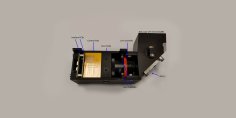
Comet Interceptor is Estonia's first deep-space mission, in which Estonia is fully participating. One of the mission's key instruments is being developed at Tartu Observatory: Optical Periscopic Imager for Comets (OPIC), which is a camera system designed for imaging comets. The mission aims to visit, for the first time in human history, a celestial body originating either from the outer edges of the Solar System or from another planetary system. During a rapid flyby, the mission will collect as much data as possible using multiple independent probes simultaneously. This could become the first opportunity to study an object from another planetary system.
The mission consists of a mothership and probes B1 and B2. The OPIC camera system will be integrated together with other instruments from European partners on the mission’s space probe B2. The camera is scheduled to be launched at the end of 2028 or at the beginning of 2029 to the Sun–Earth Lagrange point L2, located 1.5 million kilometers from Earth, which is one of the most important deep-space observation points.
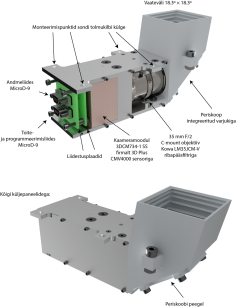
University of Tartu´s role is to deliver the OPIC instrument for the European Space Agency (ESA) F-class mission Comet Interceptor together with an industrial partner that is selected by ESA. OPIC is tasked with taking images of the comet's nucleus and its near environment and coma. The University of Tartu is leading the development of OPIC and is also responsivle of the scientific research conducted using the instrument.
University of Tartu conceptualized and designed the instrument and developed its prototypes and engineering models. The qualification and flight models of OPIC (OPIC QM, FM and FS) are developed by an industrial partner, but. the qualification and verification of the them, providing the necessary documentation, and leading the process is also by University of Tartu.
The flight model is expected to be delivered at the beginning of 2026. After that, the University of Tartu will be responsible for supporting OPIC-related tasks during the spacecraft integration.
The Comet Interceptor mission is scheduled to launch in 2029. The same launch vehicle will also carry the ESA M-class mission ARIEL, whose preliminary studies are also supported by the Tartu Observatory.
The activities have been financed through various projects, starting from 2018.
The ongoing project is: OPIC Flight Model development
Start: 01.04.2023
End: 31.12.2027
Budget: 1 386 031 €
Financing: European Space Agency
Principal Investigator: Mihkel Pajusalu
Budget: 5 000 000€
Financing: Euroopa Kosmoseagentuur
Principal Investigator: Mihkel Pajusalu
